Excision and flap repair solve two different surgical problems: one removes diseased tissue, while the other closes the resulting wound in a safer position. By the end, you will understand when pilonidal sinus excision alone may be enough, why an off-midline flap is chosen, and why an abscess can change the treatment sequence.
Key takeaways
- Excision removes sinus tracts, hair, debris, inflamed tissue, and abscess cavities.
- The defect’s size and condition determine whether primary closure or flap repair is suitable.
- A painful abscess often needs drainage before definitive pilonidal sinus surgery.
- Ask which flap is planned, why it fits your defect, and how recurrence risk is reduced.
Excision removes the disease; flap repair rebuilds the wound
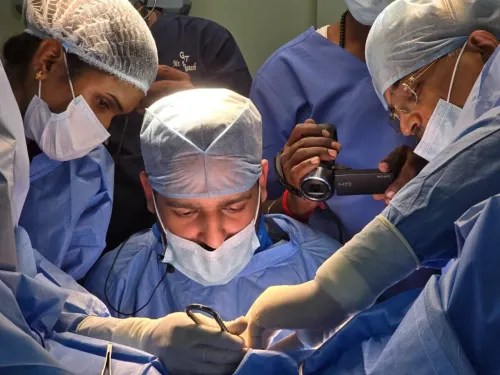
Excision and flap repair do different jobs, so neither is interchangeable with the other. Pilonidal sinus excision removes the source of the problem: sinus openings, branching tracts, trapped hair, debris, chronically inflamed tissue and any abscess cavity found during surgery. The remaining defect can be shallow or extensive.
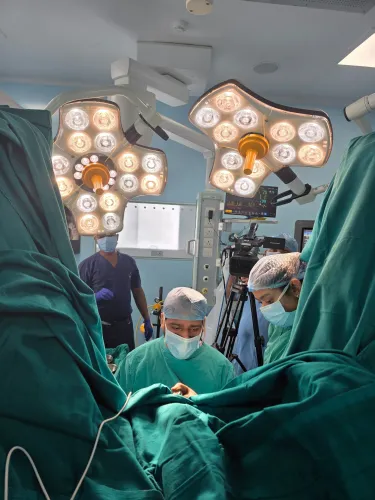
The term excision pilonidal sinus flap repair describes one reconstructive operation: removal first, followed by closure with nearby skin and subcutaneous tissue. The flap fills or covers the defect and shifts the scar away from the deep natal cleft, where moisture, friction and hair collection can stress a midline wound.
Excision alone can leave a large wound that heals slowly or breaks down. A flap does not remove diseased tissue; placing it over untreated tracts risks leaving the cause behind. The combination becomes more useful when the wound is large, deep, scarred, recurrent, contains multiple midline openings or follows failed midline surgery.
The choice is not automatically a flap after every operation. Limited disease may suit a pit procedure, open healing or simpler off-midline closure, while a painful acute abscess usually needs incision and drainage before definitive reconstruction.
Even a well-designed flap cannot guarantee that disease will not return: residual pits, new hair penetration, cleft anatomy, wound breakdown and poor postoperative care can all contribute.
The size and condition of the defect determine the closure method
The surgeon chooses closure by measuring the defect and judging the tissue around it. A small, clean cavity with limited disease may heal open or receive a limited closure; a deep, contaminated, scarred or recurrent defect needs more reliable coverage.
The cleft’s depth and the position of the remaining wound matter as much as its length.
| Option | What it involves | When it fits |
|---|---|---|
| Minimally invasive treatment | Removes or cleans selected pits and short tracts through small openings | Limited disease without a broad inflammatory cavity |
| Open healing | Leaves the excision wound to fill with healthy tissue from the base upward | Infection, contamination or a defect that should not be sealed |
| Simple closure | Brings the wound edges together, preferably with the scar shifted off the midline | Small, tension-free defects with healthy edges |
| Flap reconstruction | Moves nearby skin and fat over the defect and flattens or shifts the cleft | Large, deep, recurrent or heavily scarred wounds |
A midline closure can place the scar back in the moist, high-friction cleft, where hair and tension impair healing. Off-midline closure generally heals faster and has fewer infections and recurrences than conventional midline closure, but a flap requires wider dissection, blood-supply preservation and dead-space control.
A flap repair excision therefore suits a wound that simple closure cannot protect, not every pilonidal sinus treatment. The surgeon may delay definitive closure after draining an acute abscess until inflammation settles.
A first small episode and a painful abscess need a different sequence
A painful, tense lump with redness or pus usually needs incision and drainage first, not immediate flap reconstruction. Operating through active inflammation makes tissue handling and closure less predictable, while drainage relieves pressure without attempting definitive pilonidal sinus surgery.
- Drain the abscess and control the acute infection. Keep the cavity open or dressed as directed while swelling and discharge settle.
- Reassess the pits, sinus branches, cleft depth and scarring after inflammation has subsided. The operation may be planned weeks later, depending on healing and disease extent.
- Choose the smallest effective treatment. Limited pit treatment, hair and cleft care, open healing or simple off-midline closure may suit a first, small, uncomplicated episode.
- Consider a flap when excision would leave a large or deep defect, or when recurrent disease, multiple openings, extensive scarring or a deep cleft makes simpler closure unreliable.
A formal flap is not automatically better pilonidal sinus treatment. It requires wider dissection, careful blood supply preservation and management of dead space, so it brings a longer incision and more wound-care demands.
Its purpose is to close a difficult defect while moving the scar away from the cleft, where moisture, friction and trapped hair can undermine healing.
A first minor episode may never need that level of reconstruction. Repeated drainage, persistent pits or a failed midline operation changes the balance toward definitive excision and flap repair after the acute problem has settled.
Named off-midline flaps change the cleft’s mechanics
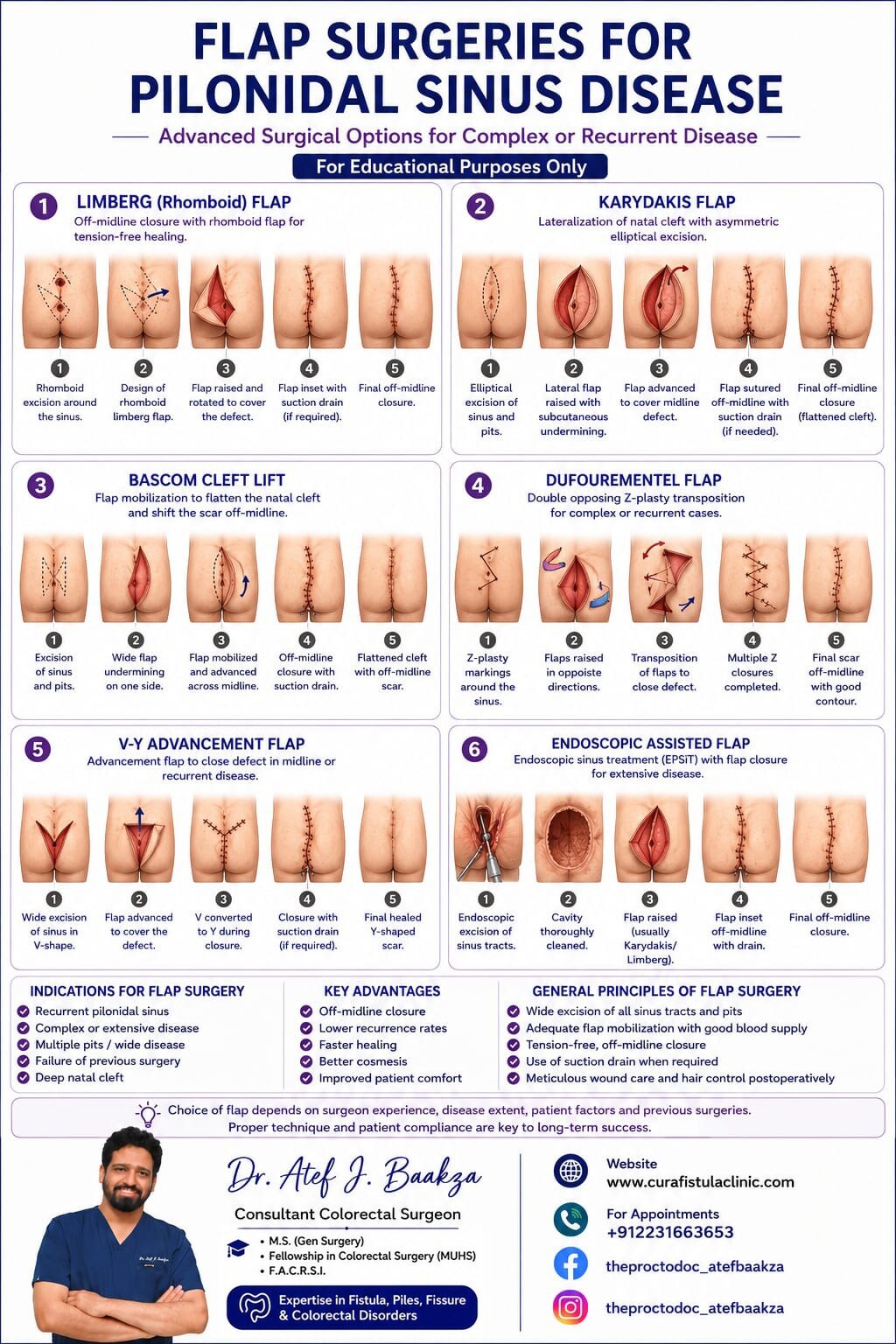
A Karydakis flap, Bascom cleft-lift or Limberg flap changes the cleft’s shape, not just the way the skin is closed. Each moves healthy skin and subcutaneous tissue over the excision defect, flattens or partly fills the deep natal cleft, and places the scar away from the midline.
That keeps hair, sweat and debris from collecting in a deep groove and avoids putting the incision where pressure and moisture are greatest.
| Technique | Tissue movement | Main mechanical effect |
|---|---|---|
| Karydakis flap | Slides an asymmetric skin-and-fat flap across the defect | Flattens the cleft and shifts the scar laterally |
| Bascom cleft-lift | Lifts and reshapes the cleft with a low, off-midline incision | Reduces cleft depth while limiting the central wound |
| Limberg flap | Rotates a rhomboid-shaped flap into the defect | Provides broad, tension-reduced coverage for larger or irregular wounds |
In flap repair excision, the surgeon must dissect deliberately, preserve blood supply, close precisely and manage dead space with sutures or a drain when needed. The benefit is more favorable cleft geometry; the cost is a larger operation, longer incision and risks such as seroma, infection, wound separation, numbness or delayed healing.
The phrase excision pilonidal sinus flap repair describes one reconstructive operation, not two unrelated procedures. A flap is a poor trade when a small defect could heal reliably with a simpler method.
Questions to settle before consenting to excision with a flap
A formal off-midline flap is not automatically the best pilonidal sinus treatment. Before consenting, ask what the operation adds over limited pit treatment, open healing, or simpler off-midline closure, and what recovery it demands.
1. What findings make pilonidal sinus excision with a flap preferable for me? Ask whether you have a large or deep defect, multiple midline openings, recurrent disease, scarring from earlier surgery, or a deep cleft.
2. Which flap do you recommend—Karydakis, Bascom cleft-lift, Limberg, or another design—and where will the scar sit? Ask how the design will flatten or shift the cleft and reduce hair and moisture trapping.
3. What will you do if the disease is smaller than expected? Compare the proposed flap with minimally invasive treatment, excision with open healing, and primary off-midline closure rather than accepting “flap” as the only option.
4. How will you manage dead space, bleeding and drainage? Ask whether you need a drain, when it will come out, and what wound breakdown would require.
5. What are your expected healing time, restrictions, pain-control plan and time away from work? Ask specifically when you can sit, drive, exercise and wash the wound.
6. What is your own recurrence and wound-complication experience with this technique, and how will you manage recurrence?
Dr. Atef J. Baakza can use your examination to explain whether your cleft depth, openings and scar pattern justify a formal flap. A flap improves mechanics; it does not eliminate recurrence or replace postoperative hair and skin care.
Related services
Pilonidal Sinus Pilonidal Sinus – Flap Repair by Dr. Atef J. Baakza Understanding Pilonidal Sinus A Pilonidal Sinus is a small tunnel or cavity that forms under the... View service → |
Pilonidal Sinus Pilonidal Sinus - Minimally Invasive Surgery Pilonidal Sinus – Excision by Dr. Atef J. Baakza Understanding Pilonidal Sinus A Pilonidal Sinus is a small cyst or tunnel that forms under the skin... View service → |
Frequently asked questions
What is the difference between pilonidal sinus excision and flap repair?
Excision removes sinus openings, branching tracts, trapped hair, debris, inflamed tissue, and any abscess cavity. Flap repair closes and reshapes the resulting wound.
How does the defect determine the closure method?
A shallow, clean defect may permit direct closure or healing without closure, while a larger, deeper, contaminated, or repeatedly operated wound may need tissue rearrangement with a flap.
Why is a first small episode treated differently from a painful abscess?
A first small episode may need limited treatment, while a painful abscess requires drainage of trapped pus. Definitive excision and flap repair may be planned after acute inflammation settles.
What are off-midline flaps used for in pilonidal sinus surgery?
Named off-midline flaps, including Karydakis, Bascom cleft lift, and Limberg flaps, move the scar away from the cleft and flatten or reshape the groove to reduce hair and moisture trapping.
What should you ask before consenting to excision with a flap?
Ask which disease will be removed, which flap is planned, why the defect needs it, where the scar will sit, what drains or wound care are required, and what recovery restrictions apply.
Keywords