An anal fistula can begin with what appears to be a small swelling or recurring boil near the anus. The swelling may drain and temporarily improve, only to return later. This repeated cycle is one of the reasons a fistula can remain untreated for months.
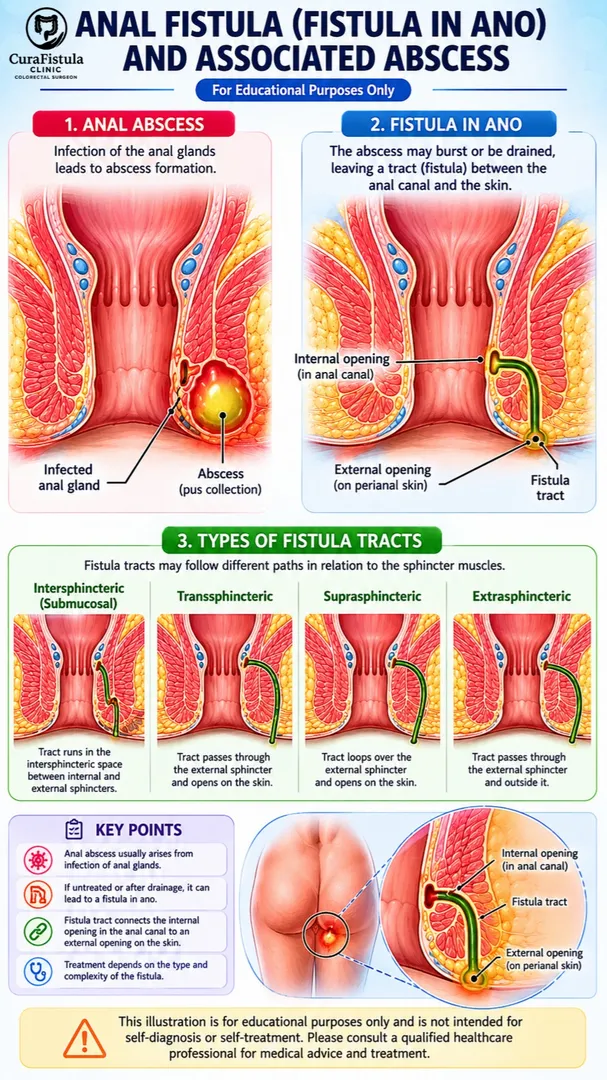
An Anal Fistula is an abnormal passage connecting the anal canal to an opening in the surrounding skin. It commonly develops following infection involving an anal gland and may be associated with a previous perianal abscess.
What Does an Anal Fistula Feel Like?
Symptoms vary according to the location and activity of the fistula. Common complaints can include:
- Recurrent swelling around the anus
- Pus or fluid discharge
- Skin irritation caused by drainage
- Pain or tenderness
- A visible opening near the anus
- Episodes of swelling followed by spontaneous drainage
- Previous history of a perianal abscess
If an opening closes temporarily while infection remains underneath, swelling and discomfort may recur.
Patients in Charni Road and neighbouring South Mumbai areas sometimes mistake the repeated swelling for a skin infection. Examination is important because treatment for a superficial skin problem is different from treatment for an underlying fistula tract.
How Does a Fistula Develop?
Many anal fistulas are related to infection of glands inside the anal canal. An abscess may form when infection develops. Even after the abscess drains, a tract can remain between the internal source and the external skin.
Not every fistula follows exactly the same pathway.
Some tracts are relatively straightforward, while others have branches, previous surgical changes or a significant relationship with the sphincter muscles responsible for continence. These anatomical differences influence treatment planning.
Can Medication Close a Fistula?
Medication may be useful in selected situations, particularly when infection or another underlying condition requires medical management. However, a persistent fistula tract often needs specialist assessment to determine whether a procedure is appropriate.
Repeatedly treating only the external discharge without understanding the tract may not resolve the underlying problem.
This is why colorectal assessment can involve more than simply examining the external opening.
How Is It Evaluated?
The assessment generally starts with the history of abscesses, discharge, pain and previous procedures. Clinical examination can provide important information.
Further imaging or investigations may be considered in selected patients, particularly when the fistula appears complex, recurrent or difficult to define clinically.
For people in Charni Road, Mumbai and elsewhere in Maharashtra, the key point is that recurrent discharge should not automatically be treated as an ordinary boil.
Dr. Atef J. Baakza evaluates anal fistulas and related colorectal conditions based on their individual anatomy and clinical presentation. Establishing whether a fistula is present, and understanding its course, helps guide appropriate treatment planning while taking sphincter function and other clinical factors into consideration.
Keywords