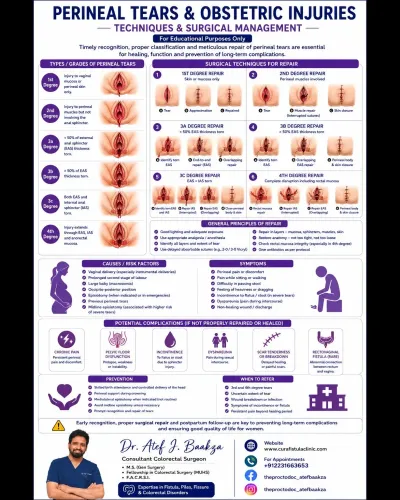
Perineal tears can occur during childbirth, trauma, or certain surgical procedures, affecting the area between the vagina and the anus in women or the area between the scrotum and the anus in men. While many minor tears heal naturally with appropriate care, more severe injuries may require surgical repair to restore normal anatomy, improve function, and prevent long-term complications.
Dr. Atef J. Baakza provides specialized evaluation and treatment for patients with complex perineal injuries, offering individualized surgical solutions based on the extent of the tear, symptoms, and overall health. Recognizing when a tear requires expert attention is the first step toward achieving a successful recovery.
Understanding Perineal Tears
Perineal tears are classified according to their severity. Minor tears usually involve only the skin and superficial tissues, while severe tears may extend into the muscles responsible for bowel control or involve the rectum.
Prompt diagnosis is essential because untreated or improperly healed tears may affect bowel function, comfort, and quality of life.
What Causes Perineal Tears?
Although childbirth is the most common cause, perineal tears may also result from:
- Difficult vaginal deliveries
- Instrument-assisted childbirth
- Previous perineal surgery
- Trauma or accidents
- Complications following colorectal procedures
- Certain inflammatory conditions affecting the perineal region
The underlying cause often influences the most appropriate treatment plan.
Signs You May Need Perineal Tear Repair
Not every tear requires surgery, but certain symptoms indicate that specialist assessment should not be delayed.
You should seek medical evaluation if you experience:
- Persistent pain that continues after initial healing
- Difficulty controlling bowel movements
- Passage of stool or gas through an abnormal opening
- A wound that does not heal properly
- Recurrent infection around the affected area
- Persistent swelling or discharge
- Discomfort while sitting or walking
- Visible separation of previously repaired tissue
These symptoms may suggest that the tear has not healed correctly or that additional treatment is required.
Why Early Treatment Matters in Girgaon
Residents of Girgaon and surrounding parts of Mumbai often balance demanding work schedules and family responsibilities, leading some to postpone medical care. However, delaying evaluation of a significant perineal tear may increase the complexity of treatment.
Early intervention can help:
- Promote better tissue healing
- Restore normal function
- Reduce the risk of infection
- Improve comfort during daily activities
- Lower the likelihood of long-term complications
Receiving timely specialist care also provides an opportunity to address concerns before they become more difficult to manage.
How Is a Perineal Tear Evaluated?
A comprehensive assessment allows the surgeon to determine the extent of the injury and identify the most appropriate treatment.
The evaluation may include:
- A detailed medical history
- Discussion of symptoms and previous treatments
- Physical examination
- Assessment of muscle involvement
- Imaging studies in selected cases
This information helps create a personalized treatment plan rather than relying on a standard approach for every patient.
When Is Surgical Repair Recommended?
Perineal tear repair is generally considered when the injury is unlikely to heal adequately without surgical intervention or when previous healing has been unsuccessful.
Surgery may be recommended for:
- Severe third- or fourth-degree tears
- Persistent defects after childbirth
- Functional problems involving bowel control
- Chronic pain caused by improper healing
- Reconstructive needs following previous surgery
- Recurrent infections related to the tear
The timing and type of repair depend on each patient's individual condition and recovery goals.
Preparing for Surgery
Patients are usually given detailed guidance before undergoing perineal tear repair. Preparation may include:
- Reviewing current medications
- Treating any active infection
- Discussing bowel preparation if necessary
- Understanding postoperative recovery expectations
- Planning adequate rest following surgery
Good preparation helps optimize surgical outcomes and supports smoother healing.
Recovery After Perineal Tear Repair
Recovery varies depending on the severity of the tear and the complexity of the repair. Most patients receive individualized postoperative instructions to promote healing.
Recovery commonly involves:
- Keeping the surgical area clean and dry
- Following prescribed medications
- Eating a fibre-rich diet to prevent constipation
- Drinking sufficient water
- Avoiding activities that place excessive pressure on the repair
- Attending follow-up appointments to monitor healing
Following these recommendations carefully contributes to improved recovery and long-term function.
Why Specialist Care Makes a Difference
Perineal tear repairs require a detailed understanding of pelvic anatomy, wound healing, and colorectal function. Beyond repairing damaged tissue, the objective is to restore comfort, preserve bowel control, and reduce the risk of future complications.
Patients seeking treatment in Mumbai benefit from consulting a specialist with experience in managing complex perineal conditions. After a thorough evaluation, Dr. Atef J. Baakza develops a treatment plan tailored to the individual's needs, ensuring that every recommendation is guided by clinical findings and focused on achieving the best possible functional and long-term outcomes.
Keywords